USDT (Tether) Explained: Reserves, Risks and Real-World Use in 2026
What is USDT?
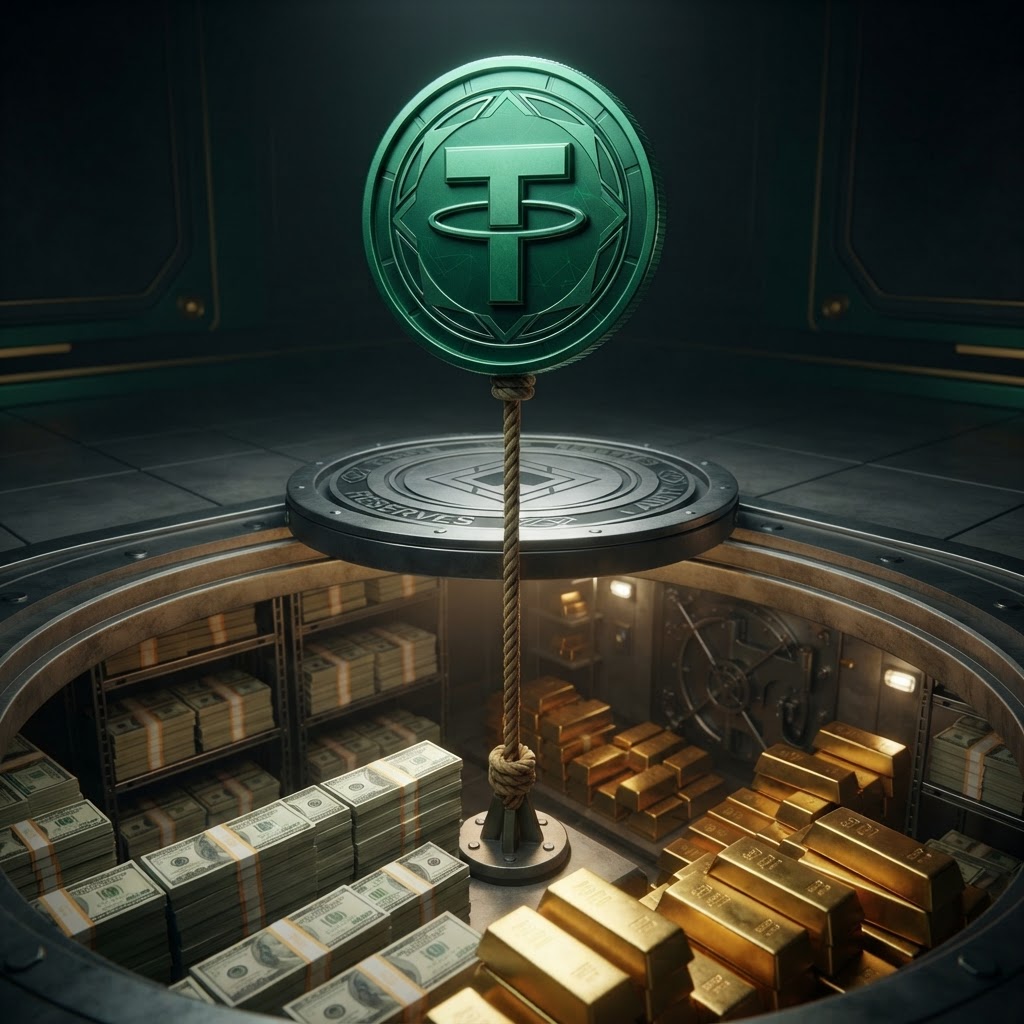
USDT (Tether) is a US-dollar-pegged stablecoin launched in 2014 by Tether Limited. It was the first major stablecoin and remains the largest by market cap. Each USDT is supposed to be redeemable for $1, backed by a reserve of cash, Treasuries and other assets held by Tether.
Where USDT dominates
- Emerging-market OTC: USDT is the de facto dollar in many regions with limited USD banking access.
- Tron and BNB Chain: USDT has the deepest liquidity on these chains.
- Crypto exchanges: most trading pairs against non-USD currencies quote in USDT.
- Remittances: in some corridors, USDT moves faster and cheaper than bank rails.
How the reserves work
Tether publishes quarterly attestations of its reserves. The composition typically includes:
- US Treasury bills (the majority)
- Cash and cash equivalents
- Money market funds
- Secured loans
- Bitcoin and gold (a small percentage)
The reserve mix is broader than USDC's, which is the main point of criticism: secured loans and precious metals are less liquid than T-bills in a stress scenario.
The real risks
1. Transparency risk
Tether's attestations are attested, not fully audited to the same standard as USDC's monthly Big Four reports.
2. De-peg risk
USDT has de-pegged by 3–5% on several occasions. It has always re-pegged, but if you need to exit at an exact moment, a de-peg can cost you.
3. Regulatory risk
Tether has settled with regulators (NYAG, CFTC) in the past and operates under a more complex global structure than USDC. For businesses with strict compliance needs, this is a consideration.
4. Chain concentration
A large share of USDT supply sits on Tron. Chain-specific risk (validator set, upgrade governance) applies.
When USDT is the right choice
- You're settling with an OTC desk that only quotes in USDT.
- Your recipient only has a Tron wallet.
- You operate in a corridor where USDT is the local liquidity standard.
When to avoid it
- Long-term treasury balances for a regulated business — prefer USDC.
- Situations where you need monthly audited reserves for your auditor.
- US institutional flows where the counterparty expects a US-issued token.
The honest verdict
USDT is not a scam and it is not risk-free. It is a battle-tested stablecoin with the deepest global liquidity, slightly more reserve complexity, and a real role in the payments stack. Use it where its liquidity advantage matters; use USDC where regulatory clarity matters.