USDC vs USDT: Which Stablecoin Is Better in 2026?
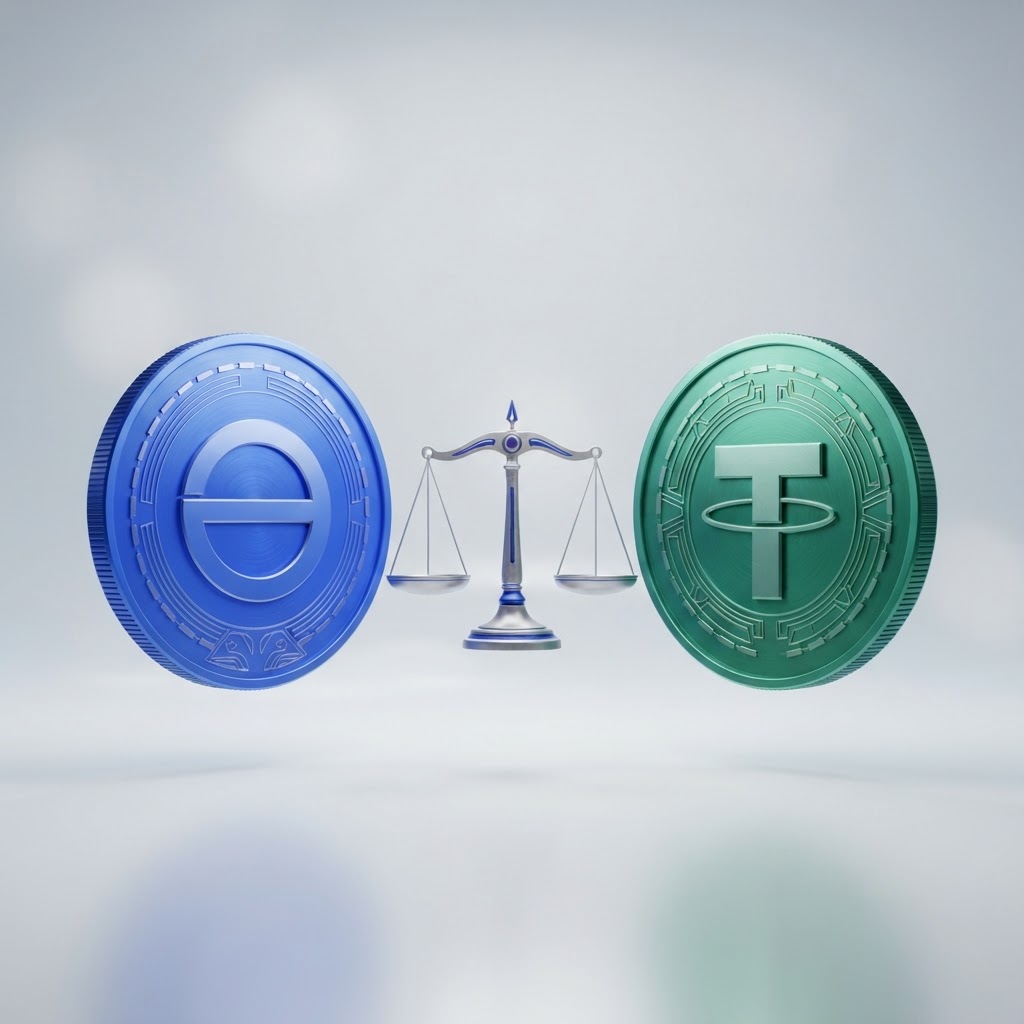
USDC vs USDT at a glance
Both USDC (issued by Circle) and USDT (issued by Tether) are dollar-pegged stablecoins used to move value across blockchains. On the surface they look interchangeable: both trade around $1, both run on Ethereum, Solana, Tron, Base and Polygon. The differences are underneath — in reserves, transparency, and regulatory posture.
Reserves and transparency
USDC
Circle publishes monthly attestations from a Big Four auditor showing that every USDC is backed by cash and short-dated US Treasuries held in regulated US financial institutions. Reserves are segregated from Circle's operating accounts.
USDT
Tether publishes quarterly attestations backed by cash, Treasuries, money market funds, bitcoin, gold, and secured loans. The reserve mix is broader and less conservative, which is part of why USDT occasionally de-pegs more than USDC during stress events.
Regulation
USDC is issued under US money transmission framework and is increasingly treated as a regulated digital dollar. USDT operates globally with a more fragmented compliance footprint. For businesses that need audit trails and regulated counterparties, USDC is the safer default.
Liquidity and chain coverage
USDT has deeper overall market cap and is dominant on Tron and in emerging-market OTC flows. USDC dominates regulated venues, DeFi protocols, and institutional treasury use. Both are liquid on Ethereum and Solana; USDC is the default on Base and Polygon for most apps.
De-peg history
- USDC briefly de-pegged to ~$0.87 in March 2023 after SVB collapsed (Circle had $3.3B stuck at SVB). It re-pegged within days once the FDIC guaranteed deposits.
- USDT has de-pegged several times (2018, 2022, 2023) by smaller margins and recovered within hours to days.
Neither has ever failed to redeem. Both are "battle tested," but USDC's de-peg had a clearer, faster resolution.
Which should you hold?
- Treasury / business balances: USDC — regulated, audited, clean.
- Cross-border OTC in emerging markets: USDT — deeper local liquidity.
- DeFi yield: both work; check the protocol's risk parameters.
- Sending to a non-custodial wallet long-term: USDC for peace of mind on reserves.
On 1TCH
1TCH uses USDB, the Bridge custodial balance, which pays out as on-chain USDC. We default to USDC because of its regulated reserve posture — it's the right choice for moving money that has to arrive on time and on peg.